
If your business has a mobile app — or plans to build one — security isn't optional. It's the foundation everything else rests on.
A poorly secured app can leak customer data, invite cyberattacks, and destroy the trust you've spent years building. And the worst part? Most businesses don't realise there's a problem until the damage is already done.
This guide breaks down why mobile app security deserves serious attention, what the real risks look like, and how to make sure your app is built right from day one.
Why Mobile App Security Matters for Businesses
Mobile apps handle sensitive data constantly — login credentials, payment details, personal information, and business records. When that data isn't properly protected, it becomes a target.
Cyberattacks on mobile applications have increased sharply over the past few years. Small businesses are not immune. Hackers often target smaller companies precisely because their security is weaker and easier to exploit.
Beyond the technical threat, there's a bigger picture: customers choose to trust you with their data. If you can't protect it, they'll go elsewhere — and they'll tell others.
Common Security Risks in Mobile Applications
Understanding the threats is the first step to addressing them.
Data Breaches
When unauthorised parties access private user data, the consequences ripple fast. Financial records, contact information, and transaction history can all be exposed. Depending on your industry, a single breach can trigger regulatory penalties, lawsuits, and significant revenue loss.
Malware Attacks
Malicious software can be embedded in apps through third-party libraries or insecure code. Once installed on a user's device, malware can steal data, track activity, or even give attackers remote access.
Weak Authentication
Apps that rely on simple passwords or skip multi-step verification make it easy for unauthorised users to break in. Weak authentication is one of the most common entry points for attackers — and one of the easiest to fix with the right development approach.
API Vulnerabilities
Most apps communicate with servers through APIs. If those APIs aren't properly secured, attackers can intercept data in transit, manipulate requests, or access back-end systems entirely. API security is often overlooked during development, making it a frequent weak point.
How Security Affects Customer Trust and Brand Reputation
Trust is hard to build and easy to lose.
When a security incident becomes public — and they usually do — customers notice. A news story about a data breach is enough to push users toward a competitor. Even if your app is quickly patched, the perception of being "the company that got hacked" sticks.
For businesses in competitive markets, reputation is currency. Companies that invest in security signal to their customers that they take privacy seriously. That's a real differentiator, especially as consumers become more aware of how their data is used.
B2B companies face additional pressure. Enterprise clients often require proof of security compliance before signing contracts. Without it, deals fall through.
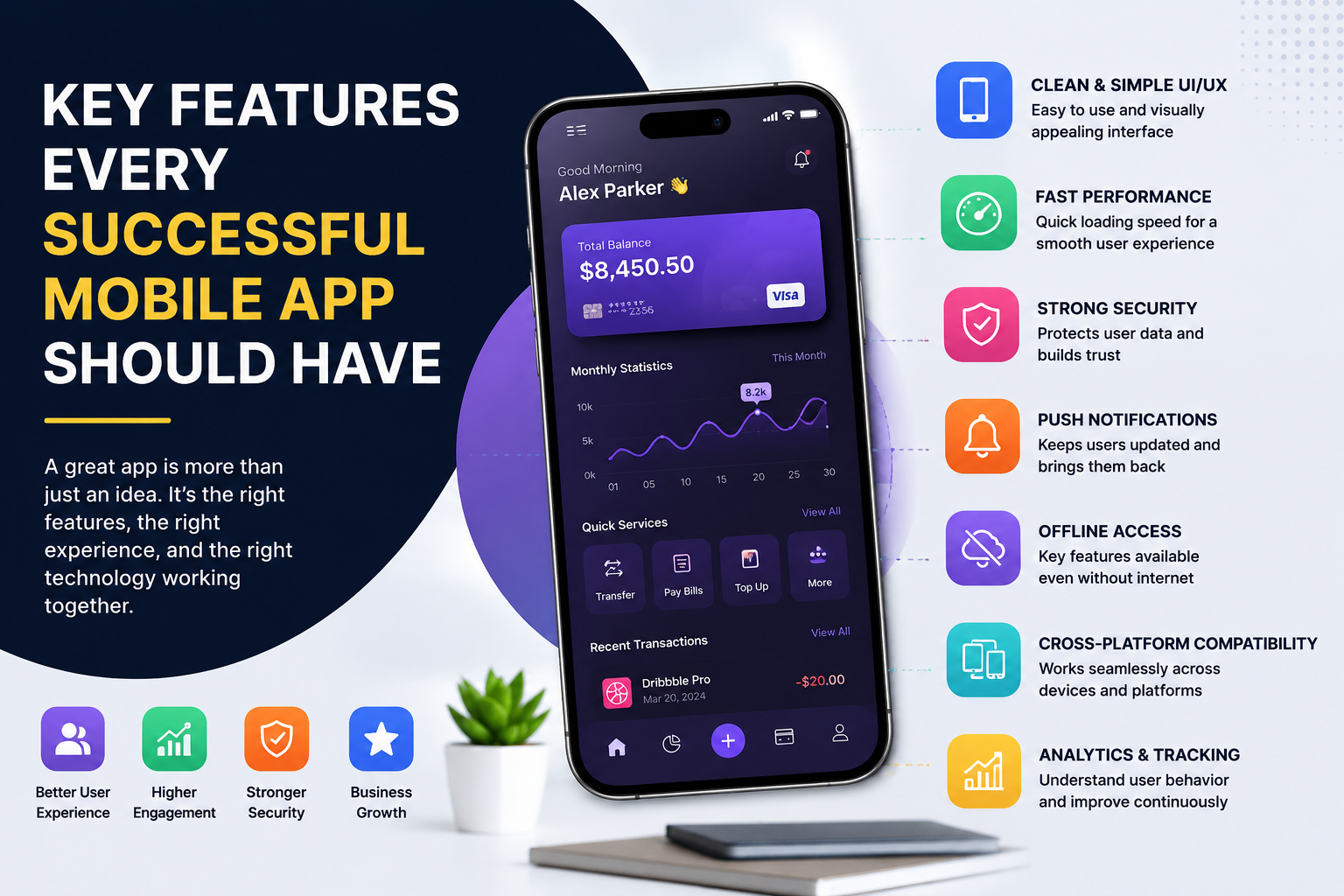
Essential Security Features Every Business App Should Have
These aren't nice-to-haves. They're baseline requirements for any app handling user data.
Data Encryption
All data — whether stored on the device or transmitted to a server — should be encrypted. Encryption ensures that even if data is intercepted, it's unreadable without the right decryption key.
Multi-Factor Authentication (MFA)
MFA adds a second layer of verification beyond a password. This alone significantly reduces the risk of unauthorised access, even if login credentials are compromised.
Secure APIs
Every API endpoint your app uses should be authenticated, rate-limited, and regularly tested for vulnerabilities. Proper API security is non-negotiable for any app that communicates with external services or databases.
Regular Security Updates
Security isn't a one-time task. New vulnerabilities are discovered constantly, and your app needs to be updated to address them. A maintenance plan that includes routine security audits and patches is essential.
Financial and Legal Risks of Poor Mobile App Security
The cost of a security failure goes far beyond the breach itself.
Businesses operating in the US and many other countries are legally required to protect user data under frameworks like GDPR, HIPAA, and CCPA. Non-compliance can result in fines that run into the millions.
On top of regulatory penalties, there are the costs of incident response — forensic investigations, customer notifications, legal counsel, and potential lawsuits. Add to that the operational disruption and reputational damage, and a single breach can threaten a company's survival.
Investing in security upfront is significantly cheaper than dealing with the fallout of a breach.
How a Mobile App Development Agency in THE USA Builds Secure Applications
Security-conscious development starts at the architecture level, not as an afterthought.
A reputable Mobile App Development Agency in USA follows a security-first development process. This means conducting threat modelling before writing a single line of code, using secure coding standards, performing penetration testing before launch, and building in compliance with regional data protection laws.
They also implement security at every layer — from the user interface down to the server infrastructure. This layered approach ensures that even if one component is compromised, the rest of the system holds.
Working with an agency that prioritises security means you're not just getting a functional app. You're getting one that's built to withstand real-world threats.
Why Businesses Choose a Mobile App Development Agency in Dubai for Secure Mobile Solutions
For companies operating across the Middle East and beyond, a Mobile App Development Agency in Dubai offers a combination of regional expertise and international security standards.
Dubai-based agencies often serve clients across multiple regulatory environments — UAE, GCC, Europe, and the US — which means they're experienced in building apps that meet diverse compliance requirements. They understand local data sovereignty laws while also aligning with global frameworks like ISO 27001 and OWASP mobile security guidelines.
This makes them a strong choice for businesses that operate internationally or plan to scale across borders.
Best Practices for Maintaining Mobile App Security
Building a secure app is step one. Keeping it secure is an ongoing commitment.
Conduct regular security audits. Scheduled reviews catch vulnerabilities before attackers do.
Monitor app activity. Anomaly detection tools can flag unusual behaviour in real time.
Update third-party libraries. Outdated dependencies are a common source of security gaps.
Train your team. Security awareness among developers and staff reduces the risk of human error.
Have an incident response plan. Know exactly what to do if something goes wrong — who to contact, how to contain the issue, and how to communicate with users.
Conclusion
Mobile app security isn't a technical checkbox — it's a business decision with real financial, legal, and reputational consequences.
The businesses that take it seriously protect their customers, their revenue, and their reputation. The ones that don't often find out why it mattered too late.
Whether you're building a new app or reviewing an existing one, now is the right time to prioritise security. Partnering with a Mobile App Development Agency in Dubai that puts security at the centre of its process is one of the smartest investments you can make.
If you're looking for a development partner who understands both the technical and business side of mobile security, let's talk.



Write a comment ...